Track Everything You Can
graphing
Reading
Add Comment
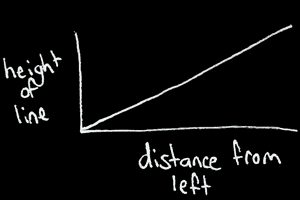
Measuring all aspects of your athletes’ performance will provide you with an understanding of what is "normal" for him / her. For instance, if you have an athlete that throws a series of 43, 50, 46, 49, and 45, what is normal for him? Yes, he’s thrown 50 but is he a 50ft thrower? Just looking at the numbers, it’s safe to assume he throws high 40's. Let's explore the 43ft throw. It’s clear that the athlete is going to be throwing normally between 45-50, so what caused him to throw 43 ft so suddenly?
I want to get into the habit of writing these things down and reviewing it over an extended period of time, but currently I keep a close eye on their throws at practice. Additionally, I want to keep tabs on where everything is going. I make a note of what occurred during bad throws, (especially if they happen often) as well as good ones. My main objective is to identify / understand what was different that resulted in a farther throw.
Beyond the field, any relevant data that helps to interpret these changes over the long term will help to understand how your athlete responds to everything. In some cases this may be environmental. For example, some athletes require over 8 hours of sleep to do well at a meet, while others may only need 4 to get the job done. Tracking as many variables as possible, along with the day to day average throws will provide you with a better understanding how to train your athletes.
0 comments:
Post a Comment